


Key takeaways
- SEO principles are the stable fundamentals that guide strategy no matter how algorithms change.
- Search intent is the most important principle — rank for what users want, not just what they type.
- The seven fundamentals: search intent, relevance, technical health, authority, content depth, user experience, and consistency.
- These principles work together — ignoring even one weakens the whole campaign.
- Service-based businesses see the biggest gains when these principles align with local SEO.
If you want consistent rankings, traffic, and qualified leads from Google, you need more than tactics.
You need strong SEO principles.
Algorithms change. Tools evolve. Trends come and go.
But the core principles of SEO remain stable.
In this guide, you’ll learn 7 SEO fundamentals that drive long-term success — especially for service-based businesses competing in local and national markets.
What Are SEO Principles?
SEO principles are the foundational rules that determine how search engines rank content and how businesses earn visibility.
Unlike tactics, which shift with every algorithm update, these principles stay constant: match search intent, build relevance, earn authority, and deliver a strong user experience.
Understanding them helps you prioritize effort and protect your rankings over the long term.
Why Do SEO Principles Matter More Than Tactics?
Principles matter more than tactics because tactics change constantly — and chasing them leaves your campaign inconsistent.
Many businesses jump from tactic to tactic:
- One month it’s blogging.
- The next it’s backlinks.
- Then it’s technical fixes.
Without foundational SEO principles, campaigns become inconsistent.
Strong SEO principles:
- Guide strategy
- Prioritize effort
- Improve ROI
- Protect long-term rankings
When you understand these SEO fundamentals, everything else becomes easier to execute.
1. Search Intent Comes First
The most important SEO principle is this:
Rank for what people actually want — not just what they type.
Every keyword has intent behind it.
Examples:
Informational intent
“What is dental SEO?”
Commercial intent
“Best SEO agency for dentists”
Transactional intent
“Emergency dentist near me”
If your content does not match the search intent, it won’t rank — even if optimized technically.
Before targeting any keyword, ask:
What is the user really trying to accomplish?
Aligning content with intent dramatically increases ranking potential.
2. Relevance Drives Rankings
Google’s primary goal is to deliver the most relevant result.
Relevance is created through:
- Clear keyword targeting
- Topical depth
- Supporting subtopics
- Structured content
Each page should focus on one primary topic.
For example, a service page should not try to rank for five unrelated services.
Topical clarity strengthens authority.
3. Technical Health Supports Visibility
Even great content won’t rank if search engines struggle to crawl your site.
Technical SEO principles include:
- Fast loading speed
- Mobile responsiveness
- Secure HTTPS connection
- Clean URL structure
- Proper internal linking
- XML sitemap submission
Google uses mobile-first indexing.
If your site performs poorly on mobile, rankings suffer.
Technical health is the foundation — and a thorough site audit is the fastest way to find what’s holding your rankings back.
4. Authority Is Built Through Links
Backlinks remain one of the strongest ranking factors.
Authority is developed when:
- Relevant websites link to your content
- Local organizations mention your business
- Industry publications cite your insights
For service-based businesses, local backlinks are especially powerful.
Quality matters more than quantity.
Ten authoritative, relevant links outperform 100 low-quality ones.
Backlink strategy must be intentional.
5. Content Depth Builds Topical Authority
Thin content rarely ranks in competitive markets.
Strong SEO campaigns build topical authority by:
- Covering related subtopics
- Answering common questions
- Expanding content clusters
- Using semantic keyword variations
For example, if you offer dental services, your content should cover:
- Dental implants
- Invisalign
- Teeth whitening
- Emergency procedures
- Insurance questions
Depth signals expertise.
Google rewards comprehensive coverage, which is where a deliberate content marketing strategy earns its keep.
6. User Experience Influences Performance
SEO is not just about algorithms.
User behavior matters.
If visitors:
- Bounce quickly
- Don’t engage
- Don’t convert
Google interprets this as a poor experience.
Strong UX principles include:
- Clear messaging
- Logical page structure
- Easy navigation
- Strong calls to action
- Fast load times
SEO brings traffic.
User experience turns traffic into leads.
7. Consistency Compounds Results
SEO is not a one-time project.
It’s an ongoing process.
Successful campaigns:
- Publish consistently
- Optimize continuously
- Monitor performance
- Adjust based on data
Rankings improve gradually.
Authority builds over time.
The businesses that stay consistent outperform those chasing shortcuts.
How Do These SEO Principles Work Together?
These principles are interconnected — each one reinforces the others.
- Search intent drives content strategy.
- Technical health enables visibility.
- Authority builds trust.
- User experience drives conversions.
- Consistency compounds growth.
Ignoring even one principle weakens the entire campaign.
Strong SEO is strategic alignment — not isolated tasks.
Common SEO Mistakes That Violate Core Principles
Many campaigns fail because they:
- Target keywords without intent analysis
- Publish thin content
- Ignore technical issues
- Focus only on traffic instead of leads
- Build low-quality backlinks
- Stop after initial results
SEO requires strategic discipline.
How Do SEO Principles Apply to Service-Based Businesses?
For service businesses, these SEO fundamentals matter even more.
Your SEO strategy should prioritize:
- Local keyword targeting
- Google Business Profile optimization
- Service-specific landing pages
- Conversion-focused design
- Reputation management
When these align with core SEO principles, growth becomes predictable. A focused search engine optimization program ties all five together for local and national visibility.
The Bigger Picture
SEO principles outlast algorithm updates.
While tactics evolve, the SEO fundamentals remain constant:
- Match intent.
- Build relevance.
- Strengthen authority.
- Optimize technically.
- Enhance experience.
- Stay consistent.
Businesses that focus on principles build durable rankings instead of temporary spikes.
Ready to Turn SEO Principles Into Measurable Growth?
Understanding SEO principles is the first step.
The next step is applying them strategically to your website, local presence, and competitive landscape.
A structured SEO roadmap built on these fundamentals can transform visibility into consistent lead generation and long-term growth. Book A Call!

About the Author:
Clayton Patterson is the founder and CEO of Digital Space Marketing. After spending nearly a decade developing websites and launching successful marketing campaigns for medium sized companies and startups, Clayton knows what truly drives conversions and brings growth to an organization. In addition to his extensive marketing experience, Clayton is a lawyer with a deep understanding of website accessibility laws and the technical requirements that all websites should abide by.




Explore the top conversion rate optimization trends shaping 2026. Learn what a CRO agency focuses on and what’s driving higher conversions.

A backlink analysis is the process of evaluating every website that links to yours to assess link quality, identify toxic links, and benchmark against competitors. It reveals what's strengthening your rankings and what's dragging them down.

Learn how SEO for dentists works, including local SEO, Google Maps rankings, and proven strategies to generate more patients consistently.

Learn what the NGINX 444 status code means, why servers close connection without response, and how to fix or configure it to block malicious traffic.

How long does SEO take? Learn realistic SEO timelines, what affects ranking speed, and what to expect in the first 3, 6, and 12 months.

What is Google Lens? Learn how Google Lens works, how to use it on Android and iPhone, and how businesses can leverage visual search.
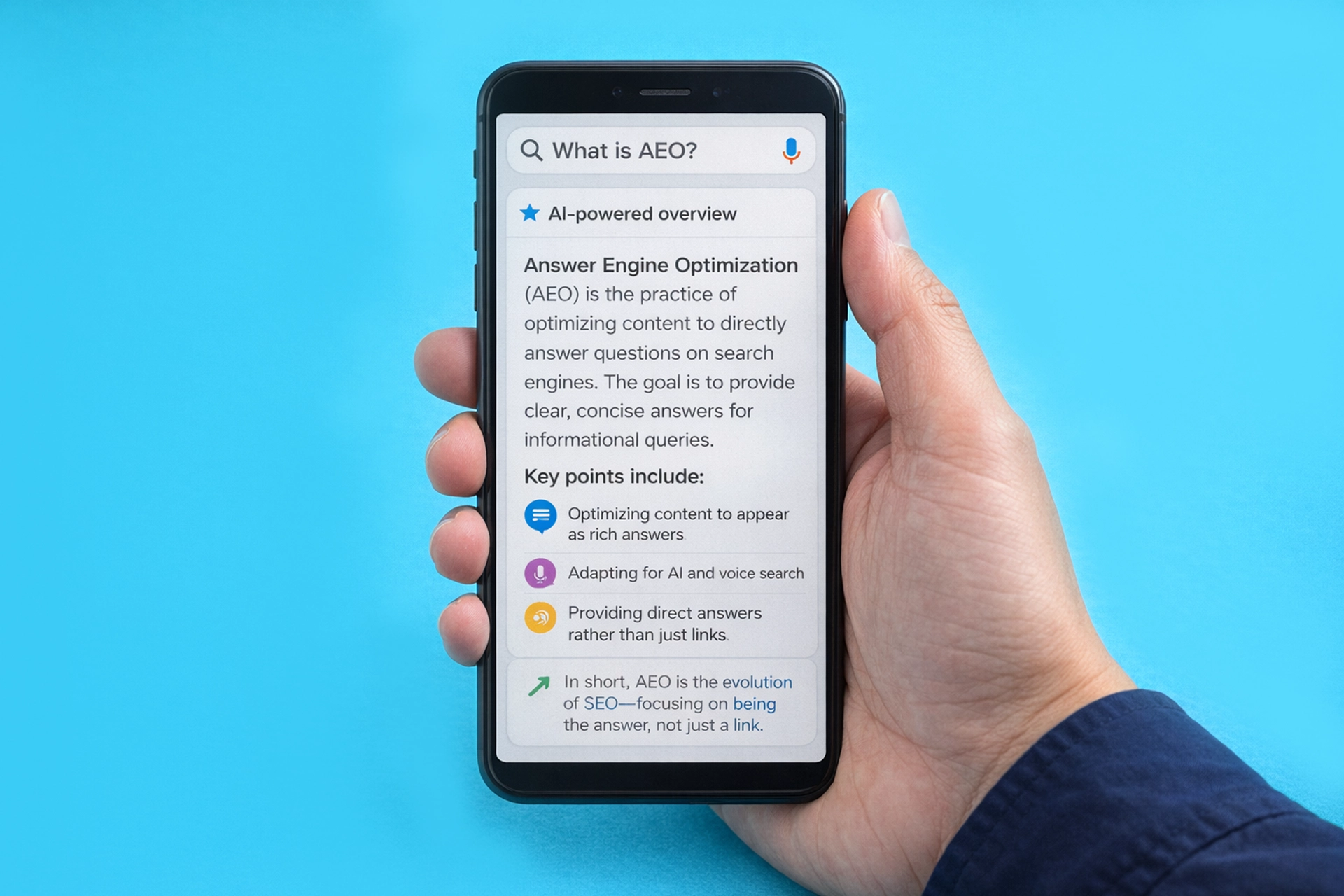
Answer engine optimization is reshaping search in 2026. Learn what AEO is, how it works, and how to optimize for AI-driven answers.

Google reviews play a major role in visibility and trust. Learn why Google reviews matter more than ever and how they impact rankings and clicks.

Struggling to get found locally? Optimize your Google My Business profile to boost visibility, calls, and foot traffic.

Your business isn’t showing up on Google, and it’s costing you leads. Here’s what’s holding your rankings back and how to fix it.
